 Plays from YouTube when you click
Optispan · February 26, 2024 · 32:58 · 12,780 views
What a survey of off-label sirolimus users found: the main claim
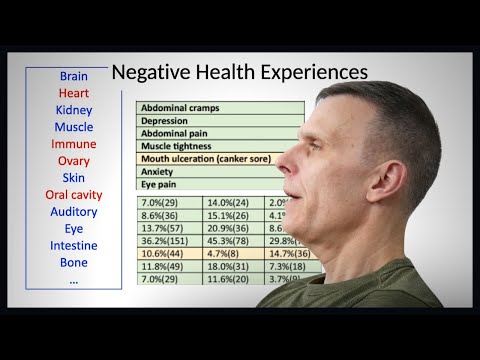
In a survey of people using sirolimus off label, only mouth sores were significantly more common than in non-users, and most users felt they benefited.
Verdict: a useful and honestly framed set of numbers with built-in limits that the speaker names. About 333 users and roughly 150 non-users answered a long online survey that asked about 44 possible side effects over the previous three months. Mouth sores were the only item significantly more common in users, at about 15 percent. Infections, especially bacterial ones, trended higher but did not reach significance. Six other symptoms, including pain and low mood, were reported less often by users.
The limits are large. Everyone was self-selected, mostly recruited through online communities of enthusiasts. Everything was reported by participants with no clinical checking, no randomization and no control for who chose to stay on the drug. People who had a bad time and quit were less likely to be in the user group at all. The speaker says as much.
The best reading is that serious harm is not obvious among people who stay on low-exposure regimens, and that the survey cannot rule out harms the label lists, because it was not built to measure lipids, blood counts or wound healing.
What a survey of off-label sirolimus users found: what holds up
- Reports that mouth sores were the only side effect significantly higher in users, about 15 percent. Mouth ulcers are the most commonly cited effect in transplant use, and the label lists them.
- Says the data are self-reported with no randomization and no clinical validation, and describes the study as a mix of fact, fiction and speculation. That candor is rare.
- Treats the bacterial infection trend as possibly real and worth a larger study. The 2024 systematic review found rises in infections and lipids in people with aging-related disease, so the signal is plausible. Source
What a survey of off-label sirolimus users found: what it skips or gets wrong
- Draws reassurance from the lack of other significant side effects. A survivor effect, where people who had problems stopped and are not in the user group, can produce that pattern.
- Suggests the lower rates of pain and low mood may be real benefits. They may be, but a survey cannot separate drug effect from the reasons people choose to take it. Source
- Does not report blood measures. The label warns about raised lipids, immune suppression and slow wound healing, none of which a symptom checklist captures well.
- Says the common regimen has stuck because early adopters set it. The evidence it rests on is a single immune study and a null-primary-outcome trial, not a dose-finding program. Source
What a survey of off-label sirolimus users found: strengths and weak spots
Strengths
- Names the survey limits itself
- Uses a non-user comparison group
- Reports mouth sores as a real effect
Weak spots
- Self-reported and self-selected
- No blood or clinical measures
- Short recall period
What a survey of off-label sirolimus users found: our recommendation
Watch for the survey design and the mouth-sore finding. Do not read the lack of other effects as proof of safety.