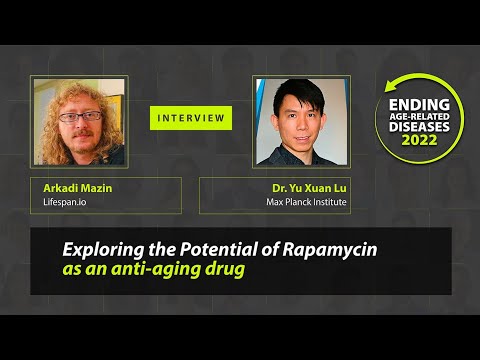
 Plays from YouTube when you click
Lifespan Research Institute · July 13, 2023 · 29:52 · 2,171 views
A Max Planck researcher on the sirolimus memory effect: the main claim
A short course of sirolimus in early adulthood extends lifespan in flies and reduces gut aging in flies and mice, which suggests lifelong use may not be needed.
Verdict: a good basic-science interview from the person doing the work, with limits that she states herself. She explains that the drug extends lifespan in worms, flies and mice across independent labs, and that it is a licensed drug, so safety and targets are better known than for a new compound. Her main finding is a kind of memory: two weeks of treatment in early adulthood in flies and three months in mice gave benefits like lifelong use, with improved gut pathology and a role for autophagy, the cell recycling process.
The caution is that these are fly and mouse results. She says plainly that human outcomes could be different. A separate fly study in our sources found that sirolimus shortened life at the highest levels and that high levels abolished fertility, so more is not better even in flies.
The idea that short treatment could be enough is attractive and unproven in people. It rests on animals and on a mechanism the researcher still describes as incompletely understood.
A Max Planck researcher on the sirolimus memory effect: what holds up
- Says lifespan extension has been seen in worms, flies and mice by independent labs, and calls it consistent. An eight-species meta-analysis found a significant extension but flagged high heterogeneity and publication bias. Source
- Explains that because the drug is already licensed, its targets and toxicity are known, which speeds repurposing. That is a fair point about development, not a statement of safety for aging use.
- Says the exact mechanisms are still being worked out and that findings in mice may not carry over to people.
A Max Planck researcher on the sirolimus memory effect: what it skips or gets wrong
- Presents the memory effect as a route to less treatment. It is a fly and mouse finding, and no human data exist.
- Does not discuss harms. A fly study in our sources found shortened life and abolished fertility at the highest levels. Source
- Treats the licensed status as reassuring. The licensed uses are transplant rejection and a lung condition, with warnings on infection, lipids and wound healing.
- Says it reduces cancer in other organs in animals. That points to an animal result and not a human cancer benefit.
A Max Planck researcher on the sirolimus memory effect: strengths and weak spots
Strengths
- Researcher is clear about animal-only status
- Explains the memory effect well
- Notes open mechanism questions
Weak spots
- No human data
- Harms not discussed
- Short interview
A Max Planck researcher on the sirolimus memory effect: our recommendation
Watch to understand the memory idea and treat it as a lead for human trials, not a guide for use.