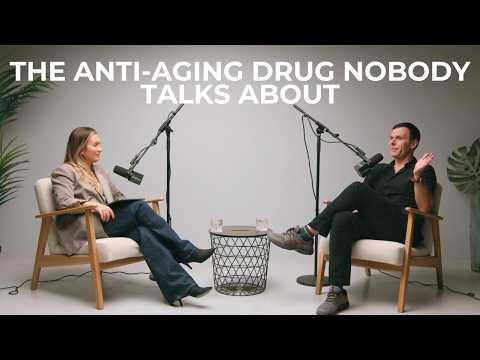
 Plays from YouTube when you click
The Healthspan Collective · March 10, 2026 · 1:34:43 · 17,539 views
Kaeberlein on sirolimus, dogs and the sick span: the main claim
Sirolimus is the best available option for slowing biological aging, its risks are low and well mapped from off-label use, and early human brain data are encouraging.
Verdict: informative on the science of aging, more generous than the evidence on safety and brain benefit. The speaker is right that sirolimus extends lifespan in yeast, worms, flies and mice, and that those results have been repeated by many labs. The 2025 reviews agree, and they also say the human case is not made.
Where he gets ahead of the data is in saying the risks are well known from off-label use and that, beyond mouth sores, nothing reaches statistical significance. The one placebo-controlled trial in healthy adults ran 48 weeks and had 129 participants, which is a short and small window for ruling out anything that builds over years. Several of the harms on the label (infections, raised lipids, slow wound healing) are dependent on exposure and time, and off-label users are not systematically tracked.
The brain segment is the weakest. He cites two small studies where brain volume and blood flow looked better after 8 weeks, and he says himself that this does not show protection from Alzheimer's. That caveat is the part to remember.
Kaeberlein on sirolimus, dogs and the sick span: what holds up
- Says the lifespan effect is reproduced in yeast, worms, flies and mice. An 8-species meta-analysis found a significant lifespan extension, while flagging high heterogeneity and publication bias. Source
- Names mouth sores as the common side effect and says infections that were feared when use began did not appear. The label lists immunosuppression and infection warnings, and the 48-week trial in healthy adults found adverse and serious adverse events similar to placebo, which says nothing about longer use. Source
- Admits that the brain imaging results prove little about whether anyone will develop dementia.
- Describes the dog trial as a randomized, placebo-controlled study with lifespan as an endpoint, which is the kind of study the human field lacks.
Kaeberlein on sirolimus, dogs and the sick span: what it skips or gets wrong
- Says nothing beyond mouth sores reaches statistical significance. The one 48-week trial in 129 healthy adults was small and short, and the label lists infection, lipid and wound-healing warnings. Source
- Frames the anti-inflammatory effect as the reason it works for aging. That is a hypothesis from animal and immune data, not an established mechanism in healthy people. Source
- Treats off-label use as a safety record. Nobody is counting outcomes in people who take it on their own, so the absence of reports is weak evidence.
- Never mentions that PEARL's primary outcome, visceral fat, did not change versus placebo, and that the signals were in secondary measures. Source
Kaeberlein on sirolimus, dogs and the sick span: strengths and weak spots
Strengths
- Clear on lifespan evidence across species
- Admits the limits of the brain data
- Describes a real placebo-controlled dog trial
Weak spots
- Safety claims outrun the short human trials
- Speaker has a stake in the field and a clinic
- Long and wandering
Kaeberlein on sirolimus, dogs and the sick span: our recommendation
Listen for the animal-evidence and dog-trial sections and treat the safety statements as an optimistic opinion. Check them against the label and the 2025 reviews.